logo
logo
cart (0)
  1. Home
  2. › Animals
  3. › Oriental (Asian) small-clawed otter
HR EN HU
Mammals

Oriental (Asian) small-clawed otter

Aonyx cinereus

HR Azijska orijentalna patuljasta vidra HU Keleti (ázsiai) kiskarmú vidra
Oriental (Asian) small-clawed otter
Video
VU Vulnerable IUCN
Video

Oriental (Asian) small-clawed otter in motion

A short video from Osijek Zoo. Watch it while you stand in front of the enclosure – you might spot what the camera caught.

Open on YouTube ↗

Clicking loads the video from YouTube.

Where it lives

Home in the wild

Distribution

They inhabit tropical coastal areas from southern India to the Malay Peninsula and southern China

Habitat

They can most often be seen in shallow freshwater streams and river shallows, swamps, but also along the seashore, in mangrove forests and in rice fields

Classification
  1. 1

    Class

    Mammalia

  2. 2

    Order

    Carnivora

  3. 3

    Family

    Mustelidae

  4. 4

    Genus

    Aonyx

  5. Species

    Aonyx cinereus

Way of life

How it lives

In the wild they live in groups of 12-15 individuals consisting of an alpha pair and their offspring.

They communicate with each other by scent and vocalization (they use about 12 different types of vocalization).

They are very active both in water and on land.

Diet

Crabs, shellfish, molluscs, frogs, fish and insects, birds and their eggs

Lifespan

In the wild about 10 years, in captivity they live on average 16-20 years

Reproduction

From birth to adulthood

  1. 01

    They reach sexual maturity at about one year of age, but begin mating only at around 2 years of age.

  2. 02

    After a pregnancy of 60-64 days, the female gives birth to 1-6 young, on average two.

  3. 03

    The young are born blind and open their eyes only around the 40th day of life.

  4. 04

    Only in the ninth week of life do they go on their "first swim".

  5. 05

    The alpha pair, together with the adult young, takes care of raising the youngest.

Fun facts

Did you know?

01

The smallest of five otter species in Asia, it weighs only 2.7-5.4 kg, is 40-60 cm long, with a tail about 25-30 cm long.

02

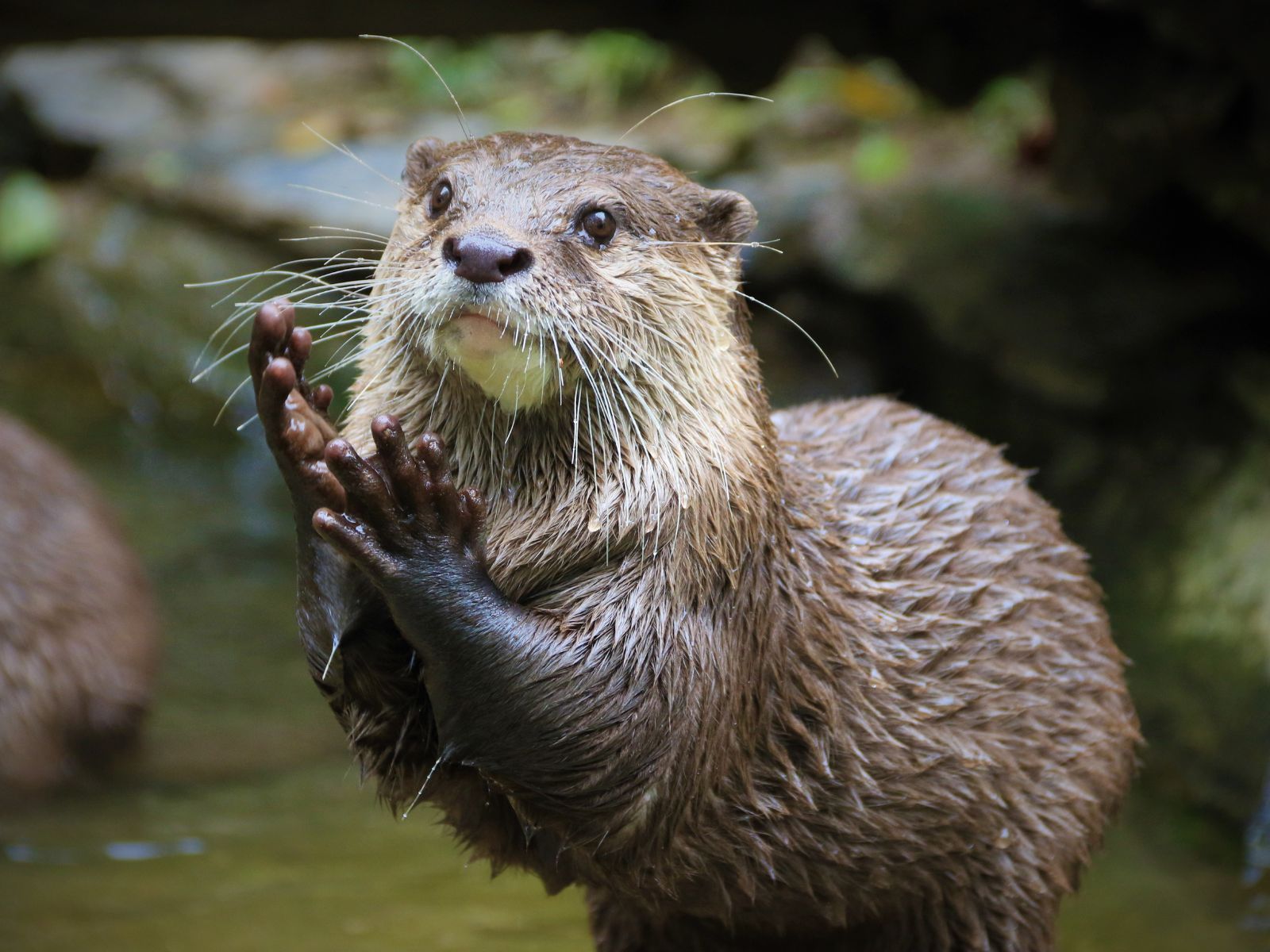
It has unusual front paws, like hands, with an enhanced sense of touch, short claws, and partially developed webbing.

03

Unlike other otter species, it spends more time on land than in water.

Conservation

Status in the wild

IUCN category
Vulnerable
LC NT VU EN CR EW EX
Lowest risk Extinct

IUCN · VU

Vulnerable

  • Population declining due to destruction of natural habitat replaced by tea and coffee plantations
  • Due to environmental pollution (pesticides) and the disappearance of crabs and fish that form the basis of the otters' diet
CITES

CITES · Appendix II

International trade in this species is strictly controlled.

IUCN

IUCN Red List

The international list that assesses how close each species is to extinction in the wild.

EAZA

Osijek Zoo

EAZA member – we take part in species conservation and visitor education.

Be part of their story

As a sponsor you support animal care at Osijek Zoo and species conservation programmes.

Meet the others

Our other residents

All animals

Cart

You have no products in your cart.

Start Shopping
Visa payment MasterCard payment Paypal payment Apple pay Google pay